


COSO Integrated Magnetic & Metal Separation System for Plastic Pellets
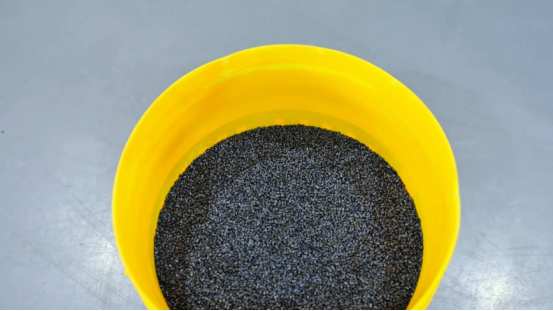
A plastic manufacturer uses plastic pellets for injection molding. Because metal contaminants may be present in the plastic pellets, the client needed a reliable metal separation solution before the pellets enter the injection molding machine, to protect equipment and ensure product quality.
The client faced several specific challenges:
1. Plastic pellets may contain both ferromagnetic and non-ferrous metal contaminants
2. Manual feeding and material handling were labor-intensive and inefficient
3. Material tended to stack or shift during conveying, affecting detection stability
4. Frequent alarms caused repeated rejection and false rejection of qualified product
Solution: Integrated Magnetic & Metal Separation System
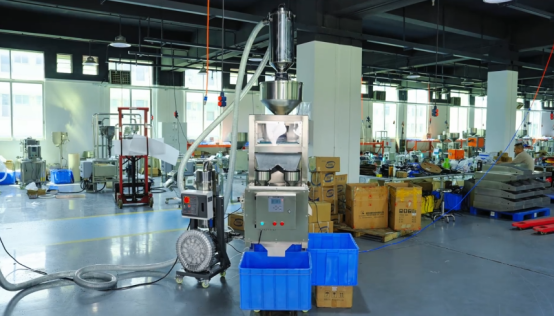
To address the client’s needs, COSO provided an integrated magnetic and metal separation system that combines automatic suction feeding, vibratory feeder, single-layer magnetic separation device, and dual-tunnel metal detection and separation in one unit.
1. Automatic Suction Feeding: Replacing Manual Handling
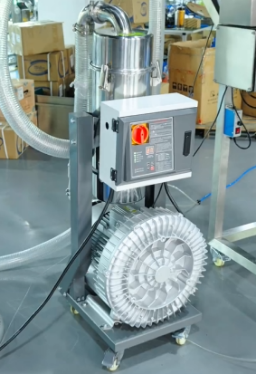
An automatic suction feeder is installed at the inlet to handle loading, replenishment, and conveying automatically. This reduces manual handling, pouring, and on-site organization, lowering labor intensity and improving site management efficiency.
This suction feeder power can be configured according to the production line’s material throughout. Quick-release pipe and hopper allow for easy material changeover, pipe cleaning, and hopper cleaning without disassembling the entire system.
2. Vibratory Feeder: Uniform Conveying, No Stacking or Shifting
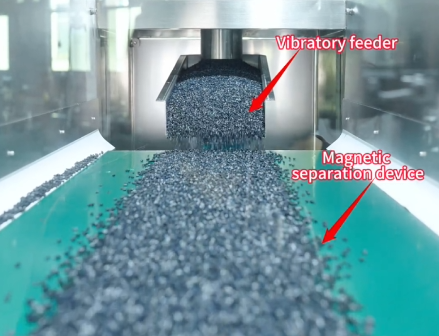
After automatic suction feeding, material enters the vibratory feeding device. This device ensures material enters the downstream process evenly, preventing stacking or shifting and supporting continuous, stable operation of the magnetic separation and metal detection stages.
3. Single-layer Magnetic Separation Device: Removing Ferromagnetic Contaminants First
This single-layer magnetic separation device removes ferromagnetic contaminants from the material. By removing ferromagnetic contaminants upfront, fewer ferromagnetic particles reach the metal detection stage, reducing the risk of frequent alarms, repeated rejection, downtime for cleaning, and false rejection of qualified product. This allows the downstream stage to focus on detecting and separating fine non-ferrous metal contaminants.
4. Dual-Tunnel Metal Detection and Separation: Metal Contaminants Discharged Separately
After ferromagnetic removal, material enters the dual-tunnel metal detection and separation stage. The two tunnels are identical in specification. While maintaining throughput, they divide the material into two streams, reducing material flow and stacking thickness in each tunnel, minimizing shielding interference, and improving accuracy for fine non-ferrous metals.
Both tunnels operate independently. Detected non-ferrous metals and residual ferromagnetic particles are discharged through the outlet, while qualified product moves to the next process. Defective product containing non-ferrous contaminants and qualified product can be discharged separately.


