

Quality Assurance in the Seafood & Aquatic Products Industry: Ensuring Safety and Consistent Quality
As a producer or retailer in the seafood and aquatic products industry, maintaining high standards of food safety and product quality is essential. The complexities of seafood processing—from harvesting, storage, and transportation to packaging and distribution—make seafood vulnerable to contamination from foreign objects like metal, plastic, stone and glass. These contaminants pose serious health risks to consumers and can result in costly product recalls, damaging your brand's reputation. Our advanced inspection and weighing systems are designed to protect the quality and safety of your seafood products at every stage of production, enhancing consumer trust and satisfaction. From detecting foreign objects to verifying product consistency and ensuring precise weight measurements, our machines help you deliver safe, high-quality seafood to your customers.
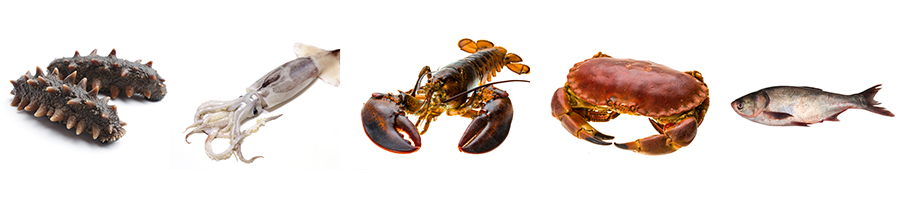
The Invisible Threat: Multi-Dimensional Challenges in Seafood Contamination Control
Unpredictable Sources of Contamination
Seafood production lines face numerous contamination risks, as foreign objects such as metal fragments, plastic particles, and glass shards can easily make their way into the seafood products at various stages—whether during the harvesting process, transportation, processing, or packaging. Contaminants can enter through equipment malfunctions, damaged packaging materials, or even human error during production or handling.
Mechanical and Human Risks
Contamination in seafood production can also arise from mechanical failures or human oversight. For example, broken parts from machines, or improper sealing, can introduce foreign objects into the seafood products. Additionally, workers might accidentally drop personal items such as tools, coins, or clothing parts, which could enter the final product. Mechanical failures such as shavings from machines or equipment wear and tear can result in contamination that is difficult to detect manually.
Detection Challenges in Seafood
Seafood products, particularly those with high moisture content like fish, shellfish, crabs and mollusks, present challenges for usual detection systems. The salt and often slippery nature of seafood can affect the sensitivity of metal detectors or X-ray systems, making it difficult to identify contaminants or defects. Moreover, some products, such as fish fillets or shellfish, may come in different irregular shapes, further complicating detection efforts.
Sanitary Costs & Bacterial Control
The risk of bacterial contamination is a major concern for seafood producers, especially in products that are highly perishable, such as fish and shellfish. Ensuring hygiene in production facilities is critical for preventing bacterial growth and maintaining product freshness. Equipment must be easy to clean and sanitize, with no hidden areas where bacteria or mold could accumulate. Frequent washdowns are required to meet strict global hygiene standards (e.g., FDA, GMP, BRC), which can be costly and time-consuming without the right machinery designed to withstand rigorous cleaning processes.
Industry Standards & Regulatory Compliance
The seafood and aquatic products industry is subject to stringent global regulations. Compliance with international standards such as FDA, GMP, BRCGS, IFS, and FSSC 22000 is essential to avoid costly recalls and protect consumer health. Staying ahead of evolving regulations helps ensure operational efficiency while enhancing consumer confidence.
Our inspection systems are designed to meet and exceed these requirements. With audit logs, our systems offer full traceable and transparent process across the supply chain. Our equipment also supports compliance with sanitary regulations, preventing bacterial contamination and reducing the risk of foodborne illnesses, keeping your production line clean and safe.
Advanced Inspection Technologies: Metal Detection, Weight Inspection, and X-ray Inspection
Manual inspection alone is difficult to meet the stringent safety standards required for seafood production. Metal detection, weight inspection, and X-ray inspection offer comprehensive solutions for ensuring product safety, quality, and regulatory compliance. These machines can be integrated into your production line for full protection or deployed individually based on your specific needs, product types, and risk factors.
Choosing the Optimal Equipment for Your Seafood Needs
Metal Detection
Metal contamination is a significant concern in seafood production. Our advanced metal detectors can identify ferrous, non-ferrous, and stainless steel contaminants such as broken equipment parts, tools, or metal fragments that may accidentally enter the production process. Seafood usually has product effect such as salt and mositure, metal detection will overcome this challenge and customize. Metal detection ensures that no harmful metal contaminants make their way into your seafood products, safeguarding consumer health.
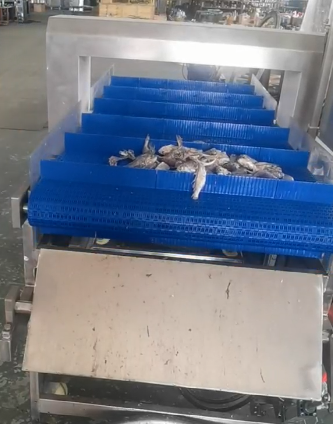
Metal contamination detection in fresh fish
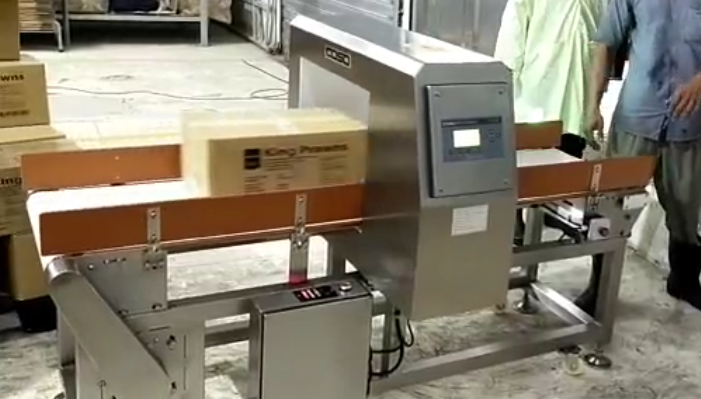
Metal contamination detection in the boxed frozen shrimp
X-ray Inspection
X-ray systems are essential for detecting foreign objects that metal detectors may miss, such as glass, plastic, and stones. Moreover, X-ray inspection is vital for checking the integrity of seafood packaging, ensuring products like fish fillets or shellfish are free from cracks, defects, or air pockets in packaged or bones. This technology ensures the quality and safety of your seafood, even when packaged in non-transparent or multi-layer packaging.
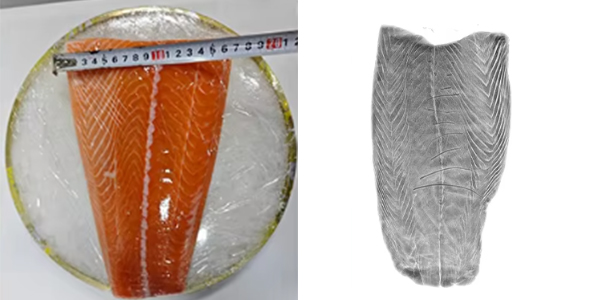
The image of salmon bones
Checkweighing
Checkweighing systems are essential for ensuring that each seafood product—whether fresh fish crab and shrimp, a box of fish fillets, bags of frozen shrimp, or canned seafood—meets regulatory weight standards. Our precision checkweighers guarantee accurate weight, avoiding underweight or overweight, and reducing consumer complaints. By ensuring compliance with weight standards, you can maintain consistency in packaging and improve production efficiency.
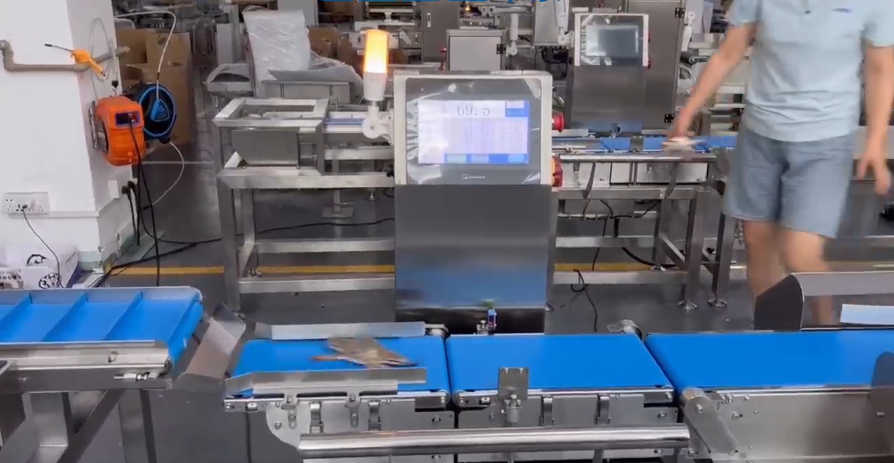
Weight inspection of crab
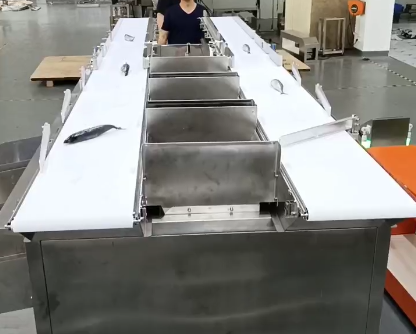
Weight sorting in fish
Cases Across the Seafood & Aquatic Products Supply Chain
Real-world results speak louder than theory. Our inspection systems are deployed across various seafood production environments, from fresh fish processing to frozen and canned seafood products. We have a proven track record of turning complex production risks into success cases.
Whether it's detecting metal contaminants in filleted fish, ensuring the quality and safety of seafood, or eliminating weight deviations in high-speed packaging lines, our systems consistently deliver results. Explore our case studies to see how we've helped seafood manufacturers achieve safety standards and improve production efficiency. Discover how we tailor our metal detectors, X-ray inspection systems, and checkweighers to meet the unique challenges of your seafood production line.
The Benefits of Automated Seafood & Aquatic Product Inspection
Seafood Safety & Consumer Health
Automated seafood inspection systems guarantee product safety by ensuring compliance with health and safety standards. Through advanced metal detection, plastic, glass, and stone detection, and X-ray imaging, these systems eliminate the risk of foreign object contamination. This not only helps prevent consumer complaints and protect your brand reputation but also ensures that every seafood product reaching the market is safe for consumers.
Compliance & Brand Loyalty
By generating logs for standards such as HACCP and GFSI, automated inspection systems help seafood producers maintain consistent compliance with food safety regulations. This transparent process builds long-term brand loyalty, enhances consumer trust.
Efficiency & Cost Reduction
Precision checkweighing and early detection of contaminants reduce waste, minimize costly recalls, and optimize production efficiency. By ensuring product quality and minimizing human errors during packaging, these systems help seafood producers save costs while ensuring their products meet industry safety and quality standards.